The final chapter of When Heaven and Earth Changed Places focuses heavily on leaving. In both sections of the story, she is departing. As a young woman, she is leaving Vietnam for a better life in America with Ed. She has left all of her family and lost connection with the most influential person in her life: her mother. As a grown woman, she is leaving her family to go back to U.S. to create ways to make her homeland a better place. She has rediscovered her way back to her family and especially her mother.
In the end, the resolution presents itself through her being able to do and see everything she wanted to on her journey back to her homeland. In the end, she has finally completed what she came to accomplish which was see her family and village again and to reconnect. This end is also a beginning for her, in which she sets forth on a mission to make Vietnam a better place. She is accomplishing this task through the East Meets West Foundation and The Global Village Foundation.
http://www.eastmeetswest.org/
http://www.globalvillagefoundation.org/
In the final paragraphs of the memoir, Le Ly writes some of the most inspired words I've ever heard. She writes, "I can only say what I myself have learned: that life's purpose is to grow. We have time in abundance--an eternity, in fact--to repeat our mistakes. We only need to correct them once, however--to learn our lesson and hear the song of enlightenment--to break the chain of vengeance forever". I believe this quote states Le Ly's main goal in writing this memoir: to show people how easy it can be to make the world a better place. All one has to do is to forgive one person or correct one mistake, and he makes the world a better place. This quote reminded me of a song that presents the same idea.
Friday, July 29, 2011

Thursday, July 28, 2011
Finding Peace (Chapter 13)
In the light of starting fresh, this section focused on change and forgiveness. In chapter 13, Le Ly uses to contrasting tones to describe the different situations she was facing in her young life and her adult life.
The tone for her young life was upbeat and forgiving. She meets Paul and sets all her plans and dreams on him, and one day he just vanishes. Although being abandoned couldn't have been easy, she decides to only take the good things from their relationship. "I decided I should draw the strength of compassion, not the weakness of bitterness, from this most important lesson--from the lessons I had learned from every American that fate or luck or god had sent to be my teacher. ... Hating people who had wronged me only kept me in their power. Forgiving them and thanking them for the lesson they had taught me, on the other hand, set me free to continue on my way." This quote teaches that in order to free ourselves, we must forgive those who have hurt us. Her relationship with Paul and his way of leaving her reminded me of "Things People Say" by Lady Antebellum.
When she takes the readers back to the current world, they face a whole different reality. The tone is angry and bitter because Anh makes her have lunch with people who don't think Vietnam will ever reach a state of peace. This may have been a tool used to bring Le Ly back down to reality and realize things may not work out the way the other government officials made it seem like it would. The tone changes back to optimism when Le Ly returns for dinner with her family because almost the entirety of the family is reunited. (the exception: Lan, who live in the U.S.)
The tone for her young life was upbeat and forgiving. She meets Paul and sets all her plans and dreams on him, and one day he just vanishes. Although being abandoned couldn't have been easy, she decides to only take the good things from their relationship. "I decided I should draw the strength of compassion, not the weakness of bitterness, from this most important lesson--from the lessons I had learned from every American that fate or luck or god had sent to be my teacher. ... Hating people who had wronged me only kept me in their power. Forgiving them and thanking them for the lesson they had taught me, on the other hand, set me free to continue on my way." This quote teaches that in order to free ourselves, we must forgive those who have hurt us. Her relationship with Paul and his way of leaving her reminded me of "Things People Say" by Lady Antebellum.
When she takes the readers back to the current world, they face a whole different reality. The tone is angry and bitter because Anh makes her have lunch with people who don't think Vietnam will ever reach a state of peace. This may have been a tool used to bring Le Ly back down to reality and realize things may not work out the way the other government officials made it seem like it would. The tone changes back to optimism when Le Ly returns for dinner with her family because almost the entirety of the family is reunited. (the exception: Lan, who live in the U.S.)
Finding a Family (Chapter 12)
This section of When Heaven and Earth Changed Places presented Le Ly in a new light. She decides to start fresh because she was getting uninterested in the life she is leading. When the man she is with at the time mistreats her, she decides she must have respect for her own self before she can be of any benefit to anyone else. She did this by defending herself and treating herself with dignity. For example, she did not let a man take advantage of her by fighting him, and she vowed that she would not get into a relationship unless she could see that it was going somewhere.
Chapter 12 focused greatly on respect for oneself and for others. Le Ly finally begins to treat herself with respect. She also shows her mother respect by giving her all the gifts she brought for the entire family and granting her the authority to distribute them as she pleased. There is also a growing respect for Anh for always being there to support his family and expressing desire to be involved Le Ly and his son's, Jimmy, lives.
Le Ly's mother says something that I believe sums up most people's goals in life. She said, "it's easy to be charitable when you're powerful and rich; more difficult when you're weak and needy--but that's just when it counts the most! So instead of sowing bitterness, which is what we would be reaping today, I sowed kindness, and you can see the crop we harvest." She uses a metaphor that compares being kind to people to sowing crops. She means that kindness breeds more kindness, while bitterness only breeds more hatred. Most people's main goal in life is to leave this earth a better place than when they entered it, and they can only do this by "sowing" kindness.
Chapter 12 focused greatly on respect for oneself and for others. Le Ly finally begins to treat herself with respect. She also shows her mother respect by giving her all the gifts she brought for the entire family and granting her the authority to distribute them as she pleased. There is also a growing respect for Anh for always being there to support his family and expressing desire to be involved Le Ly and his son's, Jimmy, lives.
Le Ly's mother says something that I believe sums up most people's goals in life. She said, "it's easy to be charitable when you're powerful and rich; more difficult when you're weak and needy--but that's just when it counts the most! So instead of sowing bitterness, which is what we would be reaping today, I sowed kindness, and you can see the crop we harvest." She uses a metaphor that compares being kind to people to sowing crops. She means that kindness breeds more kindness, while bitterness only breeds more hatred. Most people's main goal in life is to leave this earth a better place than when they entered it, and they can only do this by "sowing" kindness.
Almost in Paradise (Chapter 11)
Le Ly introduces a man named Red, who serves as one of many people who offer her false hope. He forces her to change for him, but she refuses. If someone really cared for her, then they would love her just the way she is. She wanted someone who treated her right, who she loved, and who could get her out of Vietnam. Unfortunately, all of these things would be very difficult for a girl with her reputation to find.
On her arranged tour through the city, Le Ly and her escorts pass a cemetery. She uses a simile to describe the mass amount of tombstones she sees. She says, "the headstones of cemetery for war victims flicker by like slats in a picket fence", but it's what she thinks later in that same moment that really sticks out to me. She imagines, "Perhaps one day in the far future, a child on her mother's arm will ask who these people were--why they died and why they are buried all together. I find myself praying most fervently that the mother, having known war only from distant legends, will be unable to answer. On that day, at last, the spirit of war will no longer hang over my village". I believe this is how many people feel about the war we are engaged in now; they hope that one day in the future people won't know how bad things had become between differing people, countries, and cultures. Unfortunately, wars and anguish seem to be the most memorable moments in the past.
(image: war cemetery in Vietnam)

Her desire to be "home" again was so great that she considers breaking the rules that the government had placed in front of her when she had first arrived back in Vietnam. Not even twenty years prior, her desire to leave was equally as strong.
On her arranged tour through the city, Le Ly and her escorts pass a cemetery. She uses a simile to describe the mass amount of tombstones she sees. She says, "the headstones of cemetery for war victims flicker by like slats in a picket fence", but it's what she thinks later in that same moment that really sticks out to me. She imagines, "Perhaps one day in the far future, a child on her mother's arm will ask who these people were--why they died and why they are buried all together. I find myself praying most fervently that the mother, having known war only from distant legends, will be unable to answer. On that day, at last, the spirit of war will no longer hang over my village". I believe this is how many people feel about the war we are engaged in now; they hope that one day in the future people won't know how bad things had become between differing people, countries, and cultures. Unfortunately, wars and anguish seem to be the most memorable moments in the past.
(image: war cemetery in Vietnam)

Her desire to be "home" again was so great that she considers breaking the rules that the government had placed in front of her when she had first arrived back in Vietnam. Not even twenty years prior, her desire to leave was equally as strong.
Power on Earth (Chapter 10)
In Le Ly's eyes, there were only four options on how to get out of Vietnam: foreign education, foreign husband, "exporter", or illegally. At this point of her life, she had become so desperate to get out that she sold herself as a prostitute in order to obtain the start-up money so she and Hung could leave. She deserted everything she believed in and disrespected her family and herself just to open the door to the opportunity of leaving Vietnam. In my opinion, this shows her deep desperation to leave the life she was leading in Vietnam and begin again in the United States.
Chapter 10's focal point is peace. Her dinner with Anh's government official friends turns out to be a successful talk about turning the country into a better place with the help of the United States. They say the goal of the war was to make Vietnam a sovereign nation, and now they must make the country a better place to live. One of the men explains the peace they must obtain, "But our peace must be the peace of a strong and independent nation--not the peace of a slave camp or a graveyard". The conversation Le Ly has with these men is meant to be didactic. They were there to teach her both how Vietnam needed to achieve peace through the help of the U.S. and how she could help.
The conversation about reuniting the two countries in order to obtain peace reminded me of the song "We Are The World".
Chapter 10's focal point is peace. Her dinner with Anh's government official friends turns out to be a successful talk about turning the country into a better place with the help of the United States. They say the goal of the war was to make Vietnam a sovereign nation, and now they must make the country a better place to live. One of the men explains the peace they must obtain, "But our peace must be the peace of a strong and independent nation--not the peace of a slave camp or a graveyard". The conversation Le Ly has with these men is meant to be didactic. They were there to teach her both how Vietnam needed to achieve peace through the help of the U.S. and how she could help.
The conversation about reuniting the two countries in order to obtain peace reminded me of the song "We Are The World".
Sisters and Brothers & Daughters and Sons (Chapter 8 & 9)
This section of her memoir focuses around an idiom: blood is thicker than water. In her journey component of her memoir, she is reunited with her two of her siblings, Bon Nghe and Hai. She is also overjoyed to finally see her mother again. There is a wall of resistance between Le Ly and most of her family. Her sister, Hai, refused to see her as she was working. Her brother, Bon Nghe, was reluctant to be close to her because he was unsure about she had become, and he was also, in a way, brainwashed from working for the government for so long that he felt distrustful of most everyone. Even her own mother held resistance is greeting her with a hug. Within minutes of being reunited, they feel like family again but still hold up some resistance against Le Ly and the government under which her new country is led.
Despite her young age, Le Ly is involved in the black market. She is also introduced to prostitution and human trafficking but thinks these are only for people who are extremely desperate for money. She also makes the realization that in order to find a better life for herself and her son she must move West. "If baby Hung and I and my father's spirit were to survive the death of Vietnam, we would have to turn our eyes elsewhere--to the West--to the direction of the rising, no setting, sun; and pray that sun would one day shine again on our country." This quote reminded me of how we often have to make decisions that go against what we want. She did not want to leave Vietnam, her homeland, but she had to for the sake of her son. Many of us will be faced with decisions in life where we have to place happiness of others before our own.
Although her young life is still mentioned, this section also begins the phasing out of her young life and focusing more on her adult life. Whereas, the beginning focused primarily on her life as a young farm girl, it is now beginning to have a bigger focus on her reunion with her homeland and her relatives.
Despite her young age, Le Ly is involved in the black market. She is also introduced to prostitution and human trafficking but thinks these are only for people who are extremely desperate for money. She also makes the realization that in order to find a better life for herself and her son she must move West. "If baby Hung and I and my father's spirit were to survive the death of Vietnam, we would have to turn our eyes elsewhere--to the West--to the direction of the rising, no setting, sun; and pray that sun would one day shine again on our country." This quote reminded me of how we often have to make decisions that go against what we want. She did not want to leave Vietnam, her homeland, but she had to for the sake of her son. Many of us will be faced with decisions in life where we have to place happiness of others before our own.
Although her young life is still mentioned, this section also begins the phasing out of her young life and focusing more on her adult life. Whereas, the beginning focused primarily on her life as a young farm girl, it is now beginning to have a bigger focus on her reunion with her homeland and her relatives.
A Question of Faith & A Different View (Chapters 6 & 7)
In chapters six and seven, many things happen to Le Ly that forever change the course of her life. Her residence constantly changes from Anh's house, to a stranger's home, to Lan's, to a laundry business owner's home, back to Lan's apartment. Two climactic points are also presented in this section of the memoir. Le Ly has her child, named Hung. She is also finally reunited with a member of her family.
Le Ly also has an epiphany that there is a possibility that there could be more than one outlook on the war. "It seemed a curious quirk of nature that the same machine--the same men--could act as tormentors in one instance and saviors in another. It occurred to me then that many I had previously seen from one side might, in fact, have other perspectives. All I knew for sure was that I would never see or hear a helicopter in quite the same way again." This quote furthers my belief that each person should have at least one eye-opening experience in their life where they see that their outlook or opinion isn't necessarily the only option.
Another major event is the death of Le Ly's father, who committed suicide after not being able to withstand the constant hell he was forced to live each day. She took many great lessons away from his life. She learned to be warrior, and she learned there no one to blame for how brutal the war had become. Le Ly continues to discuss her father's funeral in great detail to show her great respect for him as a father, teacher, and guide. (video: song representing Le Ly's relationship with her father)
Le Ly also has an epiphany that there is a possibility that there could be more than one outlook on the war. "It seemed a curious quirk of nature that the same machine--the same men--could act as tormentors in one instance and saviors in another. It occurred to me then that many I had previously seen from one side might, in fact, have other perspectives. All I knew for sure was that I would never see or hear a helicopter in quite the same way again." This quote furthers my belief that each person should have at least one eye-opening experience in their life where they see that their outlook or opinion isn't necessarily the only option.
Another major event is the death of Le Ly's father, who committed suicide after not being able to withstand the constant hell he was forced to live each day. She took many great lessons away from his life. She learned to be warrior, and she learned there no one to blame for how brutal the war had become. Le Ly continues to discuss her father's funeral in great detail to show her great respect for him as a father, teacher, and guide. (video: song representing Le Ly's relationship with her father)
Losing Love (Chapter 5)
Family first is a primary principle in Le Ly's culture. In this chapter, the reader is further acquainted with Sau Ban, who is seemingly Le Ly's favorite sibling. When talking of her love for Ahn, Le Ly describes her love for Sau Ban. "It reminds me of the first time I realized such a special relationship, such wholesome love, was possible between men and women--between a sister and a brother..." The respect and love the two had for each other displays their close connection as siblings. Although the two were siblings, this "wholesome love" was not limited just to brother and sister. Le Ly also uses this love to describe her affection for the Anh she meets after returning to Vietnam. Her "sibling love" is extremely similar to the Greek's agape love. This love displays tremendous respect and willingness to do anything for the other.
Throughout her story, but especially in this chapter, Le Ly shows vast motivation. As an adult, she is determined to find Anh when she returns home after a long journey. When she was younger, she was fixated on seeing her brother again after he was drafted to the Republican Army. She also shows great determination in helping her father and Ba Xuan, her sister, after they are taken into custody for associating with Chin. Also, young Le Ly's soon-to-be-son shows a great will to live and to survive, a trait he has in common with his mother.
The story of Sau Ban and his connection and devotion to his family reminds me of the song "Coming Home" by John Legend.
Throughout her story, but especially in this chapter, Le Ly shows vast motivation. As an adult, she is determined to find Anh when she returns home after a long journey. When she was younger, she was fixated on seeing her brother again after he was drafted to the Republican Army. She also shows great determination in helping her father and Ba Xuan, her sister, after they are taken into custody for associating with Chin. Also, young Le Ly's soon-to-be-son shows a great will to live and to survive, a trait he has in common with his mother.
The story of Sau Ban and his connection and devotion to his family reminds me of the song "Coming Home" by John Legend.
Losing the Way (Chapter 4)
 Chapter 4 of When Heaven and Earth Changed Places has one main focal point: hope. In light of an extremely violent war, Le Ly encourages herself to keep hope alive. "Although I did not realize it at the time, that flight and those feelings brought with them something else, something I had never experienced in Ky La, something even my wonderful parents--who knew everything about life and duty--could not, for their own heavy burdens, give me: the simple feeling of hope." This quote displays just how bad things had gotten in Vietnam. The fact that there essentially was no hope to offer to anyone, even children, is devastating. The fighting had become so terrifying that people were not sure the war would ever cease, and for some, it didn't. Le Ly did not discover this feeling of hope in her village of Ky La; she found it as she was leaving the village.
 Le Ly introduces some key individuals in this chapter as well. We are introduced to Anh and Lien, the owners of the house she works in. While she does not get to meet him quite yet, she is introduced to her soon-to-be son. Le Ly also mentions a man named Tung who is one of very few flat characters in her memoir.
While the young Le Ly is still discovering her path in the city of Saigon, the older Le Ly has decided to go back to her family despite the warnings of others.
Open Wounds (Chapter 3)
Compared to the way the American youth lived, even back then, Le Ly's childhood was anything but ordinary. On the contrary, when compared to other members of her community, her childhood was nothing out of the ordinary. Through most eyes, this young girl was forced to grow up way before her time. To her family, community, and government, she wasn't growing up fast enough.
Even so, at around the age of fifteen, she knew "a child must grow up--she cant stay an infant forever; just as war, once started, grows from infancy to assume a life of its own--one so terrible that even the parents who spawned it no longer claim it as their own". In my opinion, this quote is applicable to most if not all wars. The governments engage in the fighting, and then as it spirals out of control, they claim not to be at fault
Pathos is evident in the description of the brutality of the war which had increased greatly; Le Ly was taken into custody three times, brutally tortured, and raped twice by people she once trusted.
On her reunion journey, Le Ly faces some issues. First, she is cautioned not to go for safety reasons. Then, she was told a woman was once jailed for returning. Third, she is stopped by customs and told she must attend a meeting. She slowly starts to regret her decision to return home.
(image shows emotional destruction left by war)

Even so, at around the age of fifteen, she knew "a child must grow up--she cant stay an infant forever; just as war, once started, grows from infancy to assume a life of its own--one so terrible that even the parents who spawned it no longer claim it as their own". In my opinion, this quote is applicable to most if not all wars. The governments engage in the fighting, and then as it spirals out of control, they claim not to be at fault
Pathos is evident in the description of the brutality of the war which had increased greatly; Le Ly was taken into custody three times, brutally tortured, and raped twice by people she once trusted.
On her reunion journey, Le Ly faces some issues. First, she is cautioned not to go for safety reasons. Then, she was told a woman was once jailed for returning. Third, she is stopped by customs and told she must attend a meeting. She slowly starts to regret her decision to return home.
(image shows emotional destruction left by war)

Fathers and Daughters (Chapter 2)
Three contrasting views of the war arise. Le Ly's innocent yet ignorant view of the war is that it was a "game" and the enemy deserved everything bad that was inflicted upon them. Her mother viewed war as completely different from real life, while most people believe life was war, a constant fight for survival, and vice versa. This was the view her father had. She says, "For my father, it [the new war] was a daily gamble for life." To me, this quote is a jolt back to reality. Often times, people forget how good there life really is. We forget that there are people out there that are fighting to stay alive for just one more day.
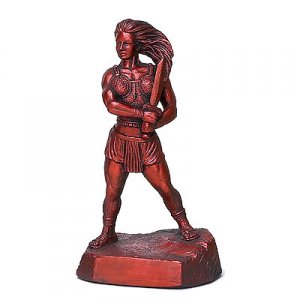
The dialogue between Le Ly and her father serve a great importance. His advice shapes the way she decides to live her life throughout the years. He teaches her how to be a warrior but says there is only one thing she must do in life, and that is to survive. (image: a woman warrior who Le Ly's father wished her to be)

As the war continues to rage, the reader learns about the perspective the village people have of the war. Many of these people have misconceptions about the war because they are receiving their information from the soldiers, and there opinions were not necessarily fair.
The dialogue between Le Ly and her father serve a great importance. His advice shapes the way she decides to live her life throughout the years. He teaches her how to be a warrior but says there is only one thing she must do in life, and that is to survive. (image: a woman warrior who Le Ly's father wished her to be)

As the war continues to rage, the reader learns about the perspective the village people have of the war. Many of these people have misconceptions about the war because they are receiving their information from the soldiers, and there opinions were not necessarily fair.
When Heaven and Earth Changed Places
Chapter 1: Coming Back
In the opening chapter of When Heaven and Earth Changed Places, the reader is introduced to the life Phung Thi Le Ly Hayslip encountered as a young farm girl in the village of Ky La of Vietnam. In addition, the reader also joins in Le Ly's journey to reunite with both her family and the place she once called home. This memoir is a frame device. Within the journey back to Vietnam, Le Ly Hayslip narrates the story of her childhood and how she came to be the person she is now.
From birth, Le Ly underwent brutal circumstances. For example, her mother was told to "suffocate her" at birth because she appeared so sickly; expecting that the child would soon die, most of her family ignored her existence. With unrelenting strength, Le Ly, often called Bay Ly, survived. Unfortunately, the harsh wold she had known from birth would only continue decline as she aged. With a raging war throughout Vietnam, she would continue to just merely escape the hands of death for the rest of her life. At her aunt's funeral, Le Ly realizes something that would foreshadow a constant conflict she would face throughout her young life. She says, "I wanted to be a good person, too, but I also wanted to live. The two did not seem to go together." In many parts of the world, being morally "good" is a survival device; in Le Ly's world, it was a survival threat.
With her mother's warrior-like strength and her father's strong will within her, Le Ly steps out on two journeys. One is to begin her first cycle of life; the other is to finally complete it.
(image: Le Ly Hayslip)

(image: Le Ly Hayslip)

Subscribe to:
Posts (Atom)